Feeling worried, stressed, or overwhelmed occasionally is a normal part of life. But when worry becomes constant, overwhelming, or starts interfering with daily activities, relationships, sleep, or emotional wellbeing, it may be more than everyday stress.
So, what are the signs of an anxiety disorder?
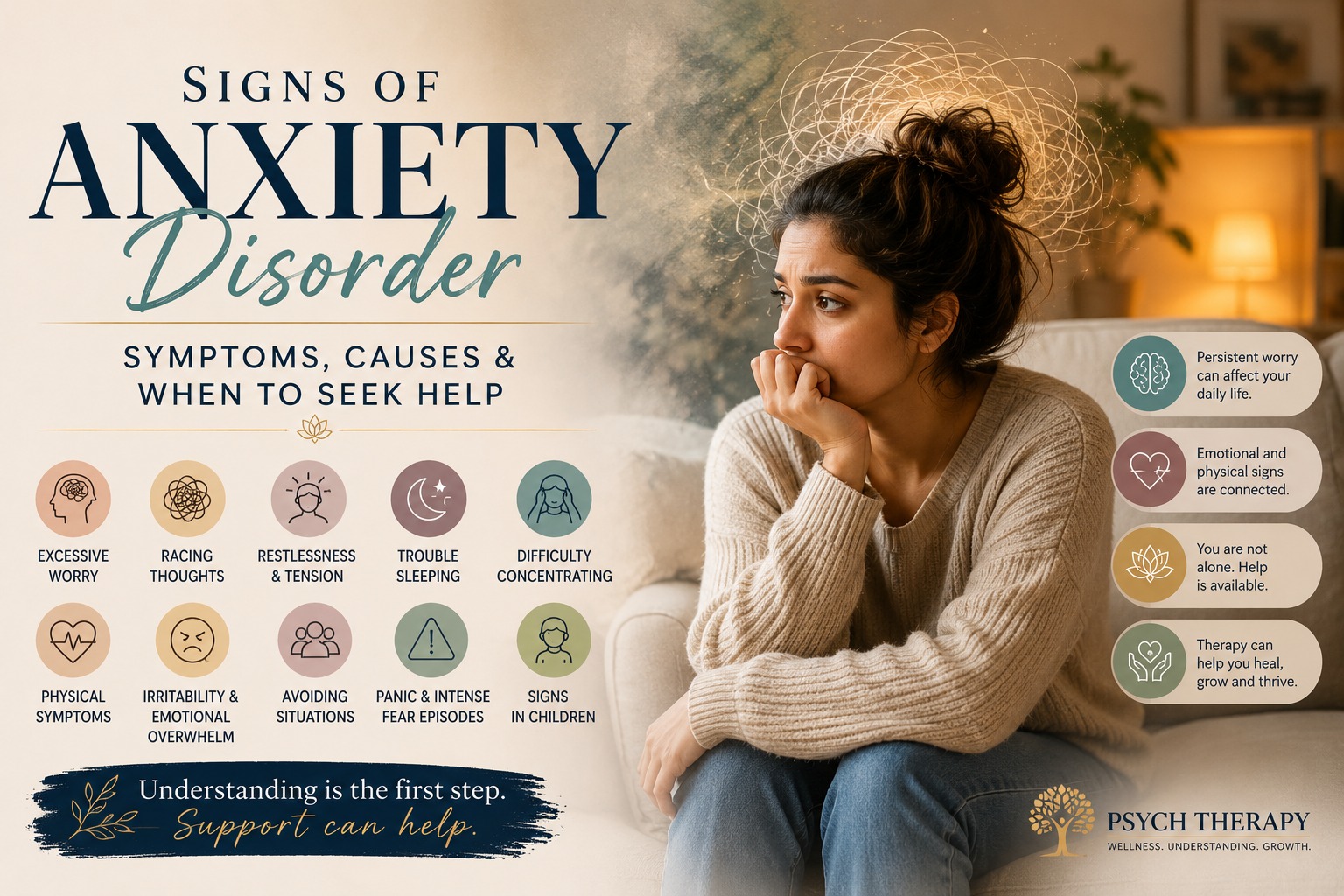
Common signs of anxiety disorder include excessive worrying, racing thoughts, restlessness, difficulty sleeping, irritability, trouble concentrating, physical tension, panic symptoms, and avoiding situations that feel stressful or overwhelming.
These symptoms can vary in intensity and may affect:
- Emotional wellbeing
- Relationships
- Work performance
- School life
- Daily functioning
Many people live with anxiety symptoms for years without realizing that support is available.
Understanding the signs early can help individuals seek the right guidance and emotional support before anxiety becomes more difficult to manage.
What Is an Anxiety Disorder?
Anxiety is a natural emotional response to stress, uncertainty, or perceived danger.
However, an anxiety disorder goes beyond occasional nervousness.
It may involve:
- Persistent worry
- Excessive fear
- Emotional overwhelm
- Ongoing stress
- Physical symptoms
- Avoidance behaviors
When anxiety becomes intense, long-lasting, or begins affecting daily functioning, professional mental health support may help.
Anxiety disorders can affect:
- Emotional wellbeing
- Work performance
- Relationships
- Sleep
- Physical health
- Decision-making
- Self-confidence
Importantly, anxiety disorders are treatable, and many individuals benefit from evidence-based therapy and emotional support.
Common Signs of Anxiety Disorder
Everyone experiences anxiety differently.
Some people mainly experience mental symptoms, while others notice emotional or physical changes.
Here are some common signs.
1. Excessive or Constant Worry
One of the most common signs of anxiety disorder is persistent worrying.
This may feel like:
- Overthinking everything
- Constant “what if” thoughts
- Difficulty switching off mentally
- Worrying about situations that have not happened
- Expecting worst-case outcomes
People with anxiety often feel mentally exhausted because the mind rarely slows down.
The worry may feel difficult to control — even when someone knows it seems excessive.
2. Racing Thoughts
Does your mind constantly feel busy?
Many individuals with anxiety describe it as:
“My brain never stops.”
Racing thoughts can include:
- Fearful thinking
- Mental overwhelm
- Replaying conversations
- Constant future planning
- Catastrophic thinking
This mental overload can make relaxation feel difficult.
It may also affect concentration and emotional balance.
3. Feeling Restless or Constantly “On Edge”
Anxiety often creates a feeling of internal tension.
You may feel:
- Restless
- Uneasy
- Easily startled
- Unable to relax
- Constantly alert
Some people describe it as feeling like something bad might happen — even without a clear reason.
This persistent tension can become emotionally draining over time.
4. Trouble Sleeping
Sleep difficulties are very common with anxiety disorders.
This may include:
- Difficulty falling asleep
- Overthinking at night
- Waking up frequently
- Feeling mentally active before bed
- Restless sleep
Poor sleep can worsen anxiety symptoms, creating a difficult cycle.
When the body does not rest properly, emotional resilience often becomes harder to maintain.
5. Physical Symptoms of Anxiety
Anxiety does not only affect the mind.
It can also show up physically.
Common physical symptoms may include:
- Muscle tension
- Rapid heartbeat
- Sweating
- Headaches
- Stomach discomfort
- Fatigue
- Shaking
- Chest tightness
- Dizziness
Sometimes people first seek medical help for physical symptoms before realizing anxiety may also be involved.
Physical symptoms are real and deserve compassionate attention.
6. Difficulty Concentrating
Many people with anxiety struggle to focus.
This can look like:
- Losing focus easily
- Forgetfulness
- Mental fog
- Difficulty completing tasks
- Feeling mentally overwhelmed
An anxious mind often remains preoccupied with worry, making concentration harder.
This may affect:
- Work performance
- Academic performance
- Daily productivity
- Confidence
7. Irritability and Emotional Overwhelm
Anxiety does not always look like nervousness.
Sometimes it appears as:
- Irritability
- Frustration
- Emotional sensitivity
- Feeling overwhelmed
- Low patience
People may feel emotionally exhausted because the nervous system is constantly under stress.
This can affect personal wellbeing and relationships.
8. Avoiding Certain Situations
Many individuals with anxiety begin avoiding situations that trigger discomfort.
Examples include:
- Social gatherings
- Public speaking
- Travel
- School or work situations
- Difficult conversations
- Crowded environments
Avoidance often provides temporary relief.
However, over time, it can make anxiety feel bigger and harder to manage.
9. Panic or Intense Fear Episodes
Some people experience anxiety through panic-like symptoms.
These may include:
- Racing heart
- Trouble breathing
- Dizziness
- Sweating
- Fear of losing control
- Feeling overwhelmed suddenly
Panic symptoms can feel frightening, especially when someone does not understand what is happening.
Professional guidance can help individuals better understand and manage these experiences.
Signs of Anxiety Disorder in Children
Children experience anxiety differently than adults.
Instead of verbalizing worry, children may show anxiety through behavior.
Signs may include:
- Frequent crying
- Irritability
- School refusal
- Sleep problems
- Separation anxiety
- Stomach aches
- Emotional outbursts
- Fearfulness
- Withdrawal
Children sometimes struggle to explain emotions clearly.
A safe and supportive environment becomes especially important for emotional wellbeing.
Professional mental health guidance can help parents better understand their child’s emotional needs.
What Causes Anxiety Disorders?
Anxiety disorders can develop for many reasons.
Common contributing factors may include:
Stressful Life Experiences
Work pressure, academic stress, family difficulties, or major life transitions.
Trauma or Difficult Experiences
Past emotional experiences can sometimes affect emotional wellbeing.
Genetics
Family history may influence mental health vulnerability.
Personality Traits
Some individuals naturally experience stronger emotional sensitivity.
Chronic Stress
Long-term pressure can increase emotional overwhelm.
Anxiety is complex and rarely has one single cause.
Every person’s experience is different.
When Is Anxiety More Than Everyday Stress?
Everyone experiences stress sometimes.
But anxiety may require more attention when it:
- Feels constant
- Interferes with daily life
- Impacts work or school
- Affects sleep
- Damages relationships
- Feels difficult to control
- Causes emotional exhaustion
If anxiety begins affecting quality of life, seeking support can be an important step toward healing.
You do not need to wait for things to become overwhelming before asking for help.
When Should You Seek Professional Help?
You may consider professional mental health support if:
- Anxiety feels persistent
- Symptoms are worsening
- Sleep is affected
- Daily functioning becomes difficult
- Emotional overwhelm feels unmanageable
- Relationships are suffering
- Panic symptoms appear
- Past trauma may be involved
Seeking support is not weakness.
It is a step toward emotional wellbeing.
Many people benefit from compassionate, evidence-based therapeutic support that helps them better understand themselves and build healthier coping strategies.
How Therapy Can Help Anxiety
Therapy can provide a safe, confidential, and non-judgmental space to explore emotional challenges.
Evidence-based therapy may help individuals:
- Understand anxiety triggers
- Build coping strategies
- Improve emotional regulation
- Process difficult experiences
- Reduce emotional overwhelm
- Strengthen resilience
Therapeutic support may also help individuals explore stress, trauma, relationship concerns, emotional difficulties, or personal growth needs.
For children, adults, couples, and families, emotional support can make a meaningful difference.
Supporting Emotional Wellbeing Through Professional Guidance
At Psych Therapy, mental health support is approached through compassion, professional care, and personalized guidance.
The practice supports:
- Anxiety and stress management
- Emotional wellbeing
- Trauma healing
- Child emotional health
- Relationship wellbeing
- Psychological assessments
- Counselling and psychotherapy
- Personal growth and healing
The goal is to create a safe, supportive, confidential, and non-judgmental environment where individuals feel heard, understood, and supported through evidence-based therapeutic care.
Healing begins with understanding — and no one has to navigate emotional struggles alone.
Frequently Asked Questions
What are the first signs of anxiety disorder?
Early signs may include excessive worrying, overthinking, trouble sleeping, irritability, restlessness, and difficulty relaxing.
Can anxiety disorder cause physical symptoms?
Yes. Anxiety can sometimes contribute to physical symptoms such as muscle tension, headaches, sweating, stomach discomfort, dizziness, or rapid heartbeat.
How do I know if I have anxiety or normal stress?
Occasional stress is normal. Anxiety may need attention when symptoms feel persistent, overwhelming, or begin interfering with daily life and emotional wellbeing.
Can children have anxiety disorders?
Yes. Children can experience anxiety, although symptoms may appear differently through behavior, emotions, school difficulties, or physical complaints.
Does therapy help anxiety?
Many individuals benefit from evidence-based therapy, which may help with emotional regulation, coping skills, understanding triggers, and improving overall wellbeing.
Final Thoughts
Anxiety can feel overwhelming, confusing, and isolating — but support is available.
Recognizing the signs early can make it easier to understand what you are experiencing and take meaningful steps toward emotional wellbeing.
Whether anxiety appears as overthinking, emotional overwhelm, restlessness, panic, or constant worry, you do not have to manage it alone.
With compassionate support, safe guidance, and evidence-based care, healing and emotional balance are possible.